TN15
TN15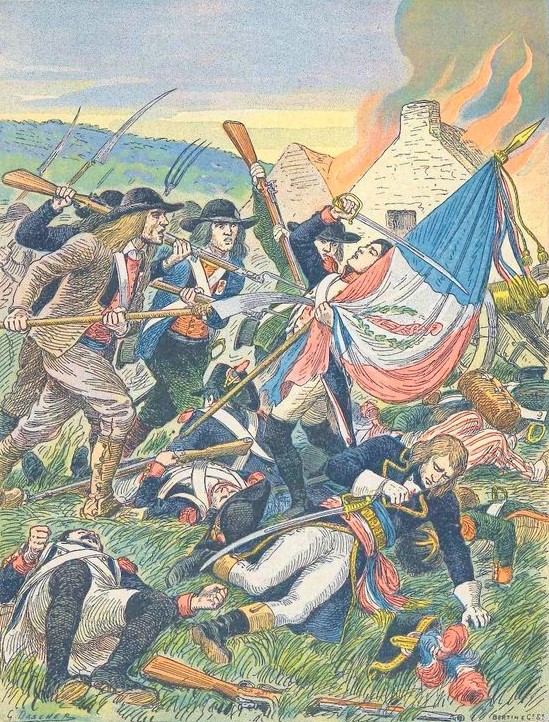
Prem Singh
It is said that revolution devours its own children. This statement about the French Revolution has been echoed and applied to the American Revolution, the Russian Revolution, and the Chinese Revolution, among other revolutions, both large and small, around the world. Scholars have extensively pondered upon this problematic aspect of a revolution. However, the crucial issue of what counter-revolution does has not received the necessary attention of scholars. A close look at the reality of the world today indicates that counter-revolution acts as a shield to protect its own children, and selectively devours the very icons who dreamed of and carried out the revolution.
Apart from Kishan Patnaik, no other leader or thinker has explicitly stated that the process of globalization is, in fact, a process of global counter-revolution. After three and a half decades of neoliberalism, it can be said that India has become a component part of that counter-revolution; and also a vocal eulogiser. If we examine India’s counter-revolution at this juncture, we find that it has been nourished by devouring its icons in an acrobatic manner. Those icons have been the dynamic source of freedom, sovereignty, equality, self-reliance, culture, and harmony, that is, these symbols and icons are the ones that have shaped our national life. The storm of counter-revolution raging in India is so powerful that its hunger is not limited only to devouring historical symbols and icons; it is also devouring spiritual and religious symbols that reside in the infinite dimension of time.
India’s freedom struggle against imperialist domination and its vision was hailed as a glorious revolution across the world. The message of that revolution not only reached the colonized countries of Asia, Africa, and the Americas, but the imperialist countries of Europe too could not remain untouched. Independent India had to carry that revolution to maximum fruition on a national and global scale. Imperialist powers, in collusion with local communal elements, dealt a major blow to India’s revolution at the very beginning by dividing the country. Meanwhile, with India’s independence, the next phase of imperialism came into the hands of the United States. The American version of imperialism was even more retrogressive and inhumane than the first. It was not merely a relic of past imperialism, destined to end with the rise of newly independent nations. The United States started the creation and expansion of new economic, strategic, commercial, educational, and intelligence institutions as the part of a far-reaching strategy and diplomacy to bring the newly independent countries of Asia, Africa, and South America under the neo-imperialist yoke. European countries that had previously held various colonies made its stooges in strengthening and expanding this new version of imperialism.
The American incarnation of imperialism, founded on the foundations of market, weapons, deceit and debauchery has essentially become the dream of the entire world. It is a term coined as the ‘American Dream’. What is the American Dream and how its magic works makes an interesting topic to ponder upon. But it would be a lengthy subject to discuss here. It is simply necessary to emphasize that if the leadership of independent India has not followed Gandhi’s path in totality, it has not become a slave to the American Dream either.
For about ten years after Gandhi’s assassination, some aura of the Indian revolution persisted among the ruling class and the people. But even at this time, some prominent opposition leaders and thinkers continued to interpret and expand Gandhi-era revolutionary spirit in the new circumstances. The country’s socialist/communist movement, divided into several streams, remained active in transforming the Indian revolution into a socialist revolution. Their work exerted some pressure on the policymakers and even the communal and right-wing elements.
Several leaders who resisted injustice globally drew inspiration from the methods and values of the Indian revolution and waged their own struggles. However, the corrupt and dishonest class that had reaped full benefits of achievements in independent India became desperate to open the door to the American Dream. Within four decades of independence, the American Dream had left no stone unturned to destroy the Indian revolution in India itself.
Rajiv Gandhi was the first to wonder and regret why the world’s two largest democracies remained alienated in relation to each other. Then, through the New Economic Policies and the Dunkel proposals, the team of Narasimha Rao and Dr. Manmohan Singh presented India as the open pasture of the American Dream. HD Deve Gowda, who had Chidambaram as Finance Minister, abdicated his throne to receive Bill Gates when he visited India. Then came Atal Bihari Vajpayee, and the long series of Jaswant Singh-Strobe Talbott talks ensued. This firmly tied up India’s destiny to the American Dream.
The BJP-led NDA government could manage only one term. The reason was that a large number of Indians continued to struggle against neo-imperialist subjugation outside the government. As a result, the government changed, and Dr. Manmohan Singh became Prime Minister of the Congress-led United Progressive Alliance (UPA) government. All governments formed after Rajiv Gandhi, before the 2014 Modi government, were coalition governments. All the players in mainstream politics, including communists and socialists, were involved in these governments in one capacity or another. Most intellectuals had either become outright advocates of neoliberalism or were acting as hidden/covert/latent neoliberals. Meanwhile, a network of NGOs, funded by foreign money, primarily by the United States, sprung up across the country, was engaged in various kinds of research and solving problems. The inherent condition attached to this foreign funding was that no genuine voice should remain in the realm of politics and thought against the American Dream. The multifaceted business of feeding the opium of the American Dream to the entire Indian population, began to spread rapidly.
It was a natural move on the part of the counter-revolutionary side to bathe Gandhi, the greatest icon of India’s revolution, in the hamam of the American Dream! Narasimha Rao, while addressing the US Congress, declared proudly that he was building the India of Gandhi’s dreams. Following him, Vajpayee, at the inauguration of the Gandhi Memorial Museum in Washington, DC, and then in his speech before the US Congress, attempted to reconcile his “Gandhian Socialism” with American imperialism. Manmohan Singh, while addressing the US Congress, once again apprised the world that the work of building an India of Gandhi’s dreams was progressing rapidly. Gandhi, who had stipulated that he could visit the US only if the country dethroned the dollar, was drowned in the American Dream by India’s ruling classes.
The purpose of the discussion here is simply to clarify that the greatest symbol of India’s revolution was made the first victim of India’s counter-revolution; and the political and intellectual elite from all walks of life have been complicit in this act. No one has argued that Gandhi’s dream is an alternative to the American Dream; no one has argued that if the consensus favours the American Dream then Gandhi’s dream should not be unnecessarily invoked. If the decision rests with the political and intellectual elite, they are responsible for it, not Gandhi.
This trend could not remain confined to Gandhi’s name. Almost all the symbols and icons of independence were drawn into the ocean of counter-revolution. In 2007, on the occasion of the 150th anniversary of the 1857 Revolt, the Congress organized a revolution march (kranti yatra) from Meerut to Delhi. Numerous civil society activists, writers and thinkers participated in it. In 1991, Manmohan Singh, who formally mortgaged the country’s independence at the feet of neo-imperialism, welcomed the marchers at the Red Fort. A flood of seminars on various aspects of the 1857 Revolt, organized with government funding, erupted. It seemed possible that India’s intelligentsia would recognize the anti-imperialist spirit of 1857 and sharpen its anti-neo-imperialist struggle. But the entire event ultimately fed counter-revolution by making known and unknown Indians, who sacrificed their lives, its fodder.
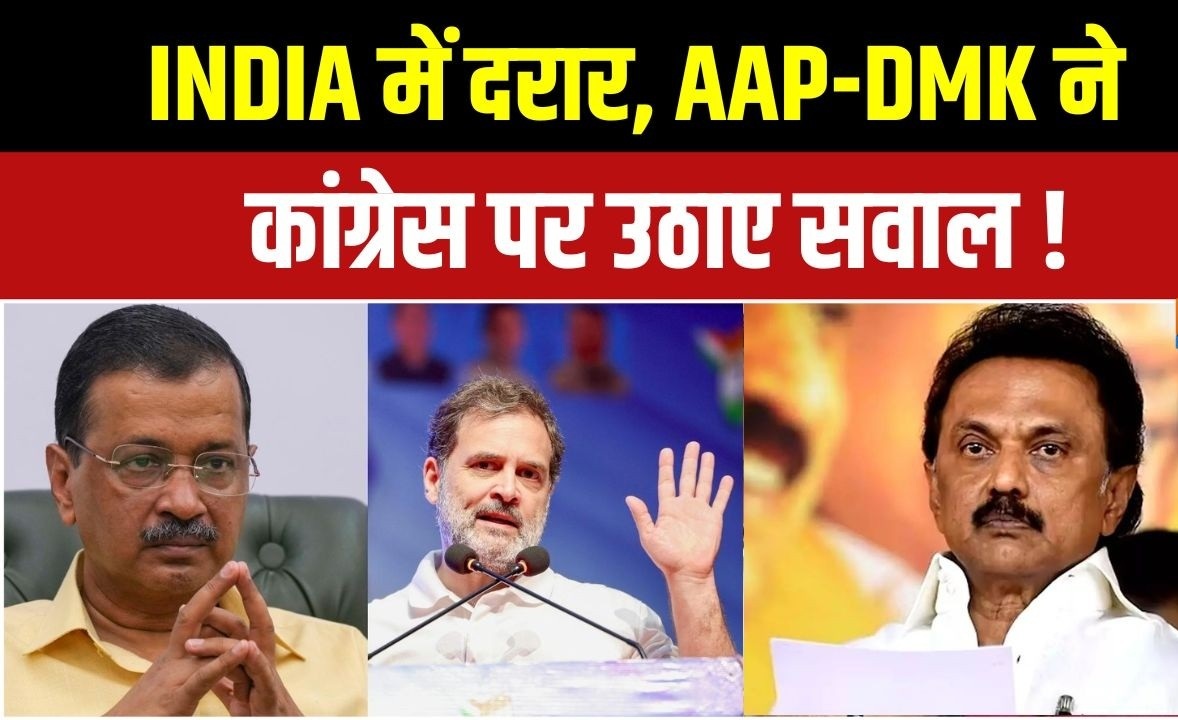
Numerous mini-counter-revolutions have occurred in different countries in conjunction with the neo-imperialist counter-revolution. This happened in India as well. Within four or five years of the 150th anniversary of the 1857 Revolt, on a platform set up by NGO leaders and the RSS, official communists, socialists who considered themselves above caste-based socialism, civil society activists, professionals from various fields, writers, scholars, religious, meditation, yoga gurus, corporate houses, and the entire media got united to support a counter-revolution disguised as an anti-corruption movement. The youth, which had become largely apolitical during two decades of neoliberalism, frantically plunged into the movement. The entire world witnessed a colourful competition to see whose boat would sail faster in the currents of counter-revolution. Naturally, the rest of society, including the vast population excluded by the New Economic Policies, was stunned by the sudden appearance of ‘revolution’ at their doorstep! The entire country eagerly watched the ‘elder Gandhi’ and ‘young Gandhi’ preaching sermons day and night on news channels.
At first, it was said that India needs to be made corruption-free; the corrupt need to be exposed publicly. But soon the call changed and it was announced that the country was going through another wave of the second and third revolution. Comparisons were made with the JP movement, even the freedom movement. Fatwas were issued declaring that anyone who did not support this revolution was not with the country. NRIs living in Europe and America too enthusiastically joined the patriotic cause. In the presence of the image of RSS’s Bharat Mata, the elder Gandhi declared to the countrymen that Gujarat Chief Minister Narendra Modi was running an ideal government. Bihar Chief Minister Nitish Kumar was placed second. Modi, who had a sharp eye on the occasion, expressed his gratitude to the elder Gandhi by writing a letter.
To avoid giving the entire credit to RSS’s Bharat Mata and Gandhi, the picture of Ambedkar’s was also added onto the stage. When the moment arrived to give the nascent revolution its scriptural name, the pundits of revolution-science declared that, as per the codex, it would be called “Kejriwal Kranti”! Gandhi had been around far too long, so it was decided to assign Ambedkar and Bhagat Singh the role of icons for the nascent party. A prominent Marxist leader had already called the hero of the revolution the Lenin of India.
Everything was so natural and coherent that nothing could be felt missing except wonder. When the revolutionary hero performed the revolutionary action of cutting an electric wire in full view of the media, two renowned civil society activists arrived to encourage him.
As promised, the governments of the elder Modi at the center and the young Modi in Delhi were established. A scholar of Bhagat Singh had long ago appealed to Prime Minister Dr. Manmohan Singh to establish the Bhagat Singh Archives and Research Center in Delhi. Young Modi fulfilled that demand, thus stamping his patent on Bhagat Singh. The public has already been acquainted with the ‘fakirs of today’; it has also enthusiastically embraced the ‘modern-day freedom fighters’. When these modern-day freedom fighters get released from jail on corruption charges, they are showered with flower petals. We understand what this means, it’s a blatant act of making the children of the counter-revolution the ‘rightful’ heirs of the millions of Indians who actually sacrificed their lives in the struggle for independence!
Whatever Gandhi’s other ‘usefulness’ may have been to the ruling class of India, he had been a counterfeit coin for vote-mongering. However, his name does have some appeal for Muslim votes. Sensing this, the nascent party born from the womb of ‘revolution’ fielded one of Gandhi’s grandsons from the East Delhi Lok Sabha constituency. I happened to be a contestant from that constituency as a Socialist Party (India) candidate. During the election campaign, some auto-rickshaws were seen roaming in Muslim-dominated neighbourhoods with banners reading “Mahatma Gandhi’s grandson.” Auto drivers were strictly prohibited from going to other colonies in the area with that banner. Gandhi’s grandson might have garnered a significant Muslim vote in Gandhi’s name, but it was an unsuccessful attempt. Atal Bihari Vajpayee and Vishwanath Pratap Singh had also unsuccessfully attempted to field the same Gandhi’s grandson in the election.
India is a large country. It is natural that many mini-revolutions have occurred within the framework of counter-revolutions, and will continue to occur in the future. One such counter-revolution in India was against secularism. Kishan Patnaik has written, “To give a recent example, we can say that secularism has been the central principle of modern Indian politics; in the 1980s, a chapter of counter-revolution, disguised as Hindutva, began aiming to transform the country’s political culture. It is consistent with the current wave of counter-revolution sweeping the world; but its significance is small in comparison; rather, it is encouraged by the atmosphere of counter-revolution.” (‘Vikalpheen Nahin Hai Duniya’ (The World Is Not Without Alternative), p. 172-173)
The above mentioned statement of Kishan Patnaik dates back to 1994. Had he been present to see the situation now, two decades later, he might not have said that its (Hindutva’s) significance is minimal and that it serves only to transform political culture. Sitting comfortably in the lap of the capitalist counter-revolution, it has not only shattered the Indian nation and society but has also destroyed the sanctity of divine symbols, the very foundation of faith and devotion. This is a more profound injury than the commercial exploitation of religion and spirituality.
The aim of this article is not to provide a complete list of the several mini-counter-revolutions that have occurred in India in conjunction with the imperialist counter-revolution. However, a number of mini-counter-revolutions have taken place in constitutional democratic institutions, educational and research institutions, diplomatic institutions, and academies related to literature, art, and culture. We are confronted daily with the counter-revolution taking place in the ecology from the sea to the Himalayas. Parallel to the above, one can examine the counter-revolution taking place within social and religious institutions/festivals. One can delve deeper into the causes resulting in counter-revolution in Indian values and human values.
By citing the examples of two counter-revolutions, an attempt has been made to illustrate that the political class and the intellectual class have jointly dragged the symbols and icons that stood for socialism, democracy, and secularism during the freedom movement and independent India into the pit of counter-revolution. India’s national flag, the tricolour, which has been the supreme symbol of nationalism during the freedom movement and independent India, is the same that is used by the wave of counter-revolution. Some counter-revolutionaries campaign for ‘tricolour in every home’, while others strive to place ‘tricolour in every hand’.
The Constitution of India is a significant symbol of the principles, the nature, and the construction of independent India, reflected in the light of the values behind the freedom movement. It goes without saying that the very act of counter-revolution in 1991 happened to be the reversal of the Basic Structure Doctrine of the Constitution. Minds, crippled by the American Dream, are simply incapable of comprehending the fact that India cannot be a secular and democratic republic without being a socialist republic. That waving copies of the Constitution and spreading fears that “they will change the Constitution” will not restore constitutional India; that constitutional institutions are being eroded not merely because the RSS attacks them but because they are being used to create a distorted form of capitalist India. Every distortion breeds another distortion.
The RSS mistreats and manipulates national symbols and icons because having been left out of the flow of history, it is doomed to do so. The mind-set the RSS represents is unable to cultivate a relationship of easy acceptance with national symbols and icons, let alone a critical one. To develop a comfortable and/or critical relationship with national symbols and icons, it must overcome its stagnant mind-set. But can the secular/progressive camp, which claims to uphold the idea of India shaped by the values of the freedom movement and the Constitution, even consider its treatment of national symbols and icons to be correct? By making their ancestors victims of counter-revolution, aren’t these children of counter-revolution playing a more profound role against the Indian revolution?
Much before confronting the truth of counter-revolution, the secular/progressive camp has to first acknowledge that India is in its grip. It seems only one aspect of the crisis: that India is in the grip of the RSS. It is unwilling to seriously consider why India is in the grip of the RSS; how to free it from its grip; and what political culture of thought and conduct should be evolved so that it does not fall further into the RSS grip. Instead, it attempts to co-opt the ideas and efforts of alternative politics in favour of neo-imperialist counter-revolution. The obvious reason is that in case it accepts this reality, it will have to confront the truth of counter-revolution, to which it continues to remain hypocritical and serves as a misleading force for the new generations. The secular/progressive camp flaunts its rage against the RSS’s distortion of history, but seeks to conceal the history that it is creating by itself.
It is to be noted that as the grip of imperialist counter-revolution tightens, the trend of printing individual and group images of iconic ancestors on banners, posters, pamphlets, placards, etc., has also increased during protests, demonstrations, rallies, and even academic seminars. The politics of icons has spread rapidly in the ‘New India’. Everyone has their own icons, and there is intense competition among them. In this era of politics of corporate-communal nexus, accusations and counter-accusations of hijacking and stealing each other’s icons’, their names have become common. Even the highest honour, the Bharat Ratna, has become entangled in the politics of icons. Recently, Karpoori Thakur and Chaudhary Charan Singh have been drawn into the fray of counter-revolution by being awarded the Bharat Ratna. Meanwhile, Mayawati has publicly praised the Chief Minister of Uttar Pradesh for diligently maintaining the memorials of her icons, something the previous Samajwadi Party government had failed to do.
Thus, it can be seen that there is no single pattern in making symbols and icons the fodder of counter-revolution. A group within the secular/progressive camp, infuriated by the Modi-Shah-Bhagwat-style communal fascist counter-revolution, has adopted a new pattern. They have launched a campaign claiming that the RSS/BJP, which were once untouchables in Indian society and politics, were legitimized by Jayaprakash Narayan and Rammanohar Lohia, therefore both are responsible for the current situation. They are even held responsible for certain other national and international problems, including Israel’s atrocities against Palestinians. Congressmen and Communists derive great pleasure from this blame-shifting campaign. Some Gandhians and Praja Socialists also feel good about this.
Any person with a basic knowledge of politics and history will know that the acceptance of communal fanaticism in India was not due to the non-Congressism of 1967 and the Janata Party experiment of 1977. Nor were communal forces and their organizations ever viewed as untouchable in society and politics. Gandhi, distressed by the impending partition of the country, never considered it unsuitable to meet or interact with communal organizations/leaders. The Congress’s right wing was occupied by the communal rightists, represented by the RSS, and the left wing by the official communists.
In the first general election of 1952, the combined vote share of the All India Jan Sangh, the All India Hindu Mahasabha, and the All India Ram Rajya Parishad was not much less to that of the socialists and communists. Among the independent candidates who got the second highest vote share and seats after the Congress, were many candidates with communal right-wing thinking. When combined with these and other reactionary/status quoist parties, the vote share of the communal rightist parties was higher than that of the socialists and communists.
However, regarding the period between 1967 and 1977, considerable discussion and analysis has already been done on this contentious subject, both selectively and comprehensively. All documents and statements/writings of JP and Lohia from that period are available. It is beyond the scope of this article to delve into all those details. However, one keenly interested is requested to read Kishan Patnaik’s article, JP Andolan Aur Aaj Ka Sandarbh (JP Movement and Today’s Context) (‘Samyik Varta’ (Loknayak Jayaprakash Narayan Special Issue, August-September 2002, Year 25, Issues 11-12).
No icon is beyond criticism, nor should it be a subject beyond question. But defaming someone with the intention of mere dismissal prompted by self-righteousness, is hardly justifiable. A stagnant society, unaware of the path ahead, or having chosen to take a dubious path, might decide to throw dirt on its predecessors. Such an exercise achieves nothing. It only deepens the crisis. It wasn’t long ago that self-proclaimed honest people launched a defamatory attack against the “dishonest” Manmohan Singh and his “corrupt” government. The new generation must consider whether the crisis has increased or decreased since then.
In this context, it’s also important to mention that some socialists, who strongly opposed the defamation of JP and Lohia, are now, under the aegis of a merchant of education and his private university, organise the Lohia Memorial Lecture with speakers like Rajnath Singh, Ramnath Kovind, Manoj Sinha and Arif Mohammad Khan. The finale of this ritual would be to extend an invitation to Narendra Modi to deliver that memorial lecture. It takes immense courage to achieve this feat in a time of unprecedented crisis facing the Indian nation and society. Interestingly, the senior journalist who led the campaign of maligning JP and Lohia happened to be a part of the same team until recently. This pattern of making icons the victims of counter-revolution, demonstrates the extent of stalemate and disorientation in India’s left and democratic movement.
If counter-revolution engulfs the entire canvas of a civilization, society, and nation, it should be clear that the period of decadence for that civilization, society, and nation is not too far behind. The responsibility for this decadence cannot be brushed aside by simply blaming those who licked the plates of this decline. Instead, a deep and serious investigation of the factors that led to this decadence should be demanded. Only then can a deep and serious effort be made possible, to challenge the predicament.
Future generations, imbued with a spirit of freedom, will observe with astonishment that we ourselves handed over India to neo-imperialists. They will see that the only difference was that earlier they were the royalties who signed treaties and agreements to hand India over to British imperialism, whereas in the new India the program of handing over the country to American neo-imperialism has been accomplished by the bureaucrats, intellectuals and leaders of the elected governments. They will further see that this time, the greed of us Indians is deeper. The roots of neo-imperialism have, consequently, gone deeper. However, they will also recognise the leaders, bureaucrats, thinkers, political activists, farmer-labour-student organizations, and journalists vociferously who opposed this assault of new slavery. From there, hopefully, the path to alternative and struggle will emerge.
Postscript: The names of the secular-progressive figures involved in some of the episodes described in this article have not been mentioned though the reader might easily identify them. However, this is not a personal criticism of them. I respect them. The arena of counter-revolution abounds with other such episodes and their associated participants. Some have been mentioned in the article to illustrate the reality of the various tendencies and shades of counter-revolution.
(The writer associated with the socialist movement is a former teacher of Delhi University and a fellow of Indian Institute of Advanced Study, Shimla)

 TheNews 15